
Views: 0 Author: Site Editor Publish Time: 2026-04-17 Origin: Site


When people choose maintenance free WPC outdoor flooring, they are usually looking for two things at the same time: a clean, modern outdoor appearance and a material that will not demand constant repair, painting, or sealing. Yet one question continues to come up in residential and commercial projects alike: Does maintenance free WPC outdoor flooring fade in sunlight over time? The honest answer is that all outdoor materials experience some level of weathering, but quality WPC flooring is designed to manage that process far better than many traditional materials. Fading does not always mean failure, and slight color adjustment over time is not the same as serious performance loss. To understand what really happens, buyers need to look beyond simple marketing language and consider UV exposure, material formula, surface technology, color selection, climate conditions, and the quality of the product itself. A well-made WPC outdoor floor can retain its overall appearance very effectively, but choosing the right product remains the key to long-term satisfaction.
WPC stands for wood plastic composite, a material made by combining wood fiber or similar plant-based fillers with plastic components and performance additives. In outdoor flooring, this combination is used to create boards or panels that offer the visual warmth of wood with improved durability in exterior environments.
The appeal of WPC is clear. It is often chosen because it can provide:
· better moisture resistance than ordinary wood
· lower maintenance demands
· good dimensional stability
· resistance to insects and rot
· a cleaner, more uniform appearance over time
For outdoor decks, terraces, poolside areas, garden walkways, and commercial landscape platforms, WPC has become a practical alternative to traditional timber. However, because it is used outdoors, it is still exposed to sunlight, rain, temperature fluctuation, dust, and environmental aging.
If the question is asked very directly, the answer is yes: WPC outdoor flooring can experience some fading in sunlight over time. But this point needs context.
Outdoor UV exposure affects nearly every surface material, including wood, paint, stone finishes, plastics, and composite products. What matters is not whether sunlight has any effect at all, but how much effect it has, how quickly it happens, and whether the change remains acceptable in real use.
In most quality products, the greatest visual change happens during the early stage of exposure, after which the color tends to stabilize more gradually. This means many users may notice a mild softening or settling of the original tone rather than a dramatic discoloration.
That distinction is important:
· Minor weathering is normal
· Severe uneven fading usually points to lower product quality, poor installation, or extreme conditions
· Surface chalking or structural damage is a different issue from normal color aging
So the better question is not simply whether fading exists, but whether the flooring is engineered to remain attractive and reliable after long-term sun exposure.
Sunlight contains ultraviolet radiation, and UV is one of the main causes of outdoor surface aging. In WPC materials, prolonged UV exposure can gradually affect pigments, surface layers, and some exposed material components.
Ultraviolet light breaks down surface color stability over time. This is the most obvious reason outdoor flooring may look slightly different after months or years.
High temperatures can intensify surface stress, especially in areas with strong direct sun for many hours each day.
Sun, rain, heat, and cooling cycles work together to create gradual weathering. This combination often affects appearance more than sun alone.
Foot traffic, cleaning practices, and airborne particles can also influence how the surface reflects light, which may make some color changes seem stronger.
This is why two decks made from similar materials can age differently depending on location and daily conditions.
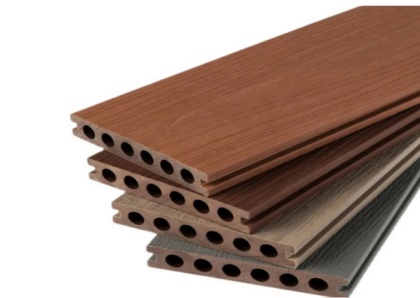
One of the biggest misunderstandings in the market is the assumption that all composite flooring performs similarly. In reality, WPC outdoor flooring fade resistance can vary significantly from one manufacturer to another.
Several factors affect long-term color stability:
The ratio of wood fiber, polymer content, UV stabilizers, and pigments influences how well the flooring resists weathering.
Co-extruded or capped WPC products often perform better than simpler uncapped designs because the protective outer layer can improve UV and stain resistance.
Consistent extrusion, better raw materials, and more stable production control usually result in better outdoor performance.
A denser, more carefully finished board may weather more evenly than a low-cost board with inconsistent texture or poor color control.
For buyers, this means price alone should never be the only basis for selection. A lower-cost product may seem attractive at first but may show faster surface change in harsh sunlight.
Color selection plays a bigger role than many customers expect. Even if two products age at a similar technical rate, the visible result may look quite different.
Darker colors often absorb more heat, which can sometimes make weathering and surface temperature changes more noticeable. Lighter shades may show less visual contrast when slight fading occurs, while some medium natural wood tones tend to age in a more balanced way.
Color type | How fading may appear | Practical impression over time |
Dark brown / charcoal | Slight lightening may be more visible | Elegant look, but sunlight change may be noticed sooner |
Medium teak / walnut | Usually ages more naturally | Balanced choice for many outdoor projects |
Light gray / sand | Fading may be less visually dramatic | Good for bright modern spaces |
Red-toned wood colors | Hue shift may be easier to notice | Attractive initially, but color change may stand out more |
This does not mean dark colors should be avoided. It simply means expectations should be realistic. If color stability is a major concern in full-sun installations, discussing shade selection in advance can help achieve a better long-term result.
The same maintenance free WPC outdoor flooring can perform differently in different regions. Climate matters because sunlight intensity, humidity, airborne salt, temperature range, and rainfall patterns all affect outdoor aging.
A deck installed in a shaded garden in a mild climate may retain its appearance differently from one installed on an open rooftop in a hot coastal region.
· strong year-round direct sunlight
· high UV index regions
· reflective surroundings such as glass, concrete, or water
· rooftop or elevated decks with little shade
· areas with extreme daily heat buildup
By contrast, moderate climates and partially shaded settings may reduce the speed of visible color change. This is why a good supplier will often ask where and how the flooring will be used rather than recommending one product for all environments.
From our perspective, the most honest answer to the question “Does Maintenance Free WPC Outdoor Flooring Fade in Sunlight Over Time?” is that some degree of color weathering can happen, but good outdoor WPC is engineered so that the change remains controlled, gradual, and acceptable in real-world use. For most projects, the real issue is not whether sunlight has any effect at all, but whether the flooring continues to look clean, stable, and suitable for the space after long-term exposure. In our experience, customers make better decisions when they compare product structure, UV resistance, color choice, climate suitability, and manufacturing quality together rather than focusing on one promise alone. At Zhejiang Everok New Material Co., Ltd., we believe outdoor flooring should be evaluated with practical expectations and technical understanding. If you are planning a deck, terrace, garden walkway, or commercial outdoor surface and want to learn more about suitable WPC flooring options, performance details, or long-term appearance considerations, you are welcome to explore more information from Zhejiang Everok New Material Co., Ltd. and discuss the right solution in a more informed way.
No. The rate of fading depends on the product formula, UV stabilizers, surface technology, color choice, manufacturing quality, and the local climate.
Yes. Mild color adjustment after exposure to sunlight is normal for many outdoor materials and does not necessarily mean the flooring quality is poor.
In many cases, yes. Capped or co-extruded WPC products often offer improved UV resistance, stain resistance, and more stable long-term appearance.
Choosing a higher-quality product, selecting a suitable color, ensuring proper installation, and understanding the site’s sun exposure can all help reduce visible fading over time.


