
Views: 0 Author: Site Editor Publish Time: 2026-04-14 Origin: Site


When homeowners, developers, and commercial buyers compare outdoor flooring materials, one question comes up again and again: how long does maintenance free WPC outdoor flooring last compared with wood decking? It is an important question because outdoor surfaces are exposed to rain, sunlight, temperature shifts, foot traffic, furniture movement, and seasonal moisture changes year after year. A deck may look beautiful on the day it is installed, but what really matters over time is how well it resists fading, cracking, warping, rot, staining, and maintenance burden. Traditional wood decking has a long history and a natural appearance that many people appreciate, but it also comes with regular sealing, staining, sanding, and repair needs. Maintenance free WPC outdoor flooring, by contrast, is designed to reduce these ongoing demands while offering longer-term structural and visual stability in many outdoor settings. For buyers making a long-term investment, the real comparison is not only about initial appearance or price. It is about lifecycle performance, upkeep requirements, durability in real conditions, and whether the product can remain attractive and functional for many years without constant attention.
WPC stands for wood plastic composite. It is typically made from a combination of wood fiber, plastic polymers, and additives that help improve durability, weather resistance, and surface performance. In outdoor flooring applications, WPC boards are designed to provide the appearance of wood while reducing many of the weaknesses associated with traditional timber.
The phrase maintenance free WPC outdoor flooring does not mean the product never needs any care at all. Rather, it generally means the material does not require the repeated staining, painting, sealing, or heavy refinishing that wood decking often needs. Normal cleaning may still be necessary, but the overall workload is far lower.
This difference is one of the main reasons WPC has become increasingly popular in:
· residential terraces
· poolside decking
· garden walkways
· commercial outdoor platforms
· public landscape projects
· hospitality and leisure spaces
The service life of WPC outdoor flooring depends on product quality, formulation, installation, climate, and use intensity. In many cases, high-quality WPC decking products are expected to last 20 to 30 years, and sometimes longer under favorable conditions.
This longer lifespan is supported by several features:
· resistance to moisture-related decay
· reduced risk of insect damage
· more stable dimensional behavior
· less frequent surface deterioration from weather exposure
· lower maintenance-related wear from sanding or refinishing
Of course, not all WPC products perform equally. Entry-level materials may not match the lifespan of more advanced capped or engineered WPC boards. Still, when buyers ask how long does WPC decking last, the answer is often more favorable than with untreated or poorly maintained wood decking.
Wood decking can also last for many years, but its lifespan tends to vary more dramatically depending on species, installation quality, climate exposure, and maintenance discipline.
As a general reference:
· lower-cost softwood decking may last around 10 to 15 years
· pressure-treated wood may last 15 to 20 years with proper care
premium hardwood decking may sometimes last 20 years or more, but often at a higher initial cost and with continued maintenance demands
The important phrase here is with proper care. Wood decking can perform well, but it usually depends much more heavily on regular intervention. Without timely staining, sealing, cleaning, and inspection, wood may absorb moisture, crack, splinter, discolor, or begin to rot earlier than expected.
So while wood can last a long time, the true question is not just how long it can last, but how long it lasts in typical real-world use when maintenance is inconsistent or delayed.
The table below offers a simple comparison to help readers understand the practical difference between maintenance free WPC outdoor flooring and wood decking.
Factor | Maintenance Free WPC Outdoor Flooring | Wood Decking |
Typical lifespan | 20–30 years or more | 10–20 years depending on wood type and care |
Resistance to rot | High | Lower, especially if moisture is trapped |
Resistance to insects | High | Moderate to low depending on treatment |
Surface stability | Generally stable | More prone to warp, crack, or split |
Maintenance needs | Low | Medium to high |
Repainting or staining | Usually not needed | Often required regularly |
Weather performance | Strong in many climates | Can decline faster without upkeep |
Long-term appearance retention | More consistent | Often depends on maintenance frequency |
This comparison does not mean wood is a poor material in every case. It simply shows that WPC often offers a more predictable long-term outcome for buyers who want reduced upkeep and stronger resistance to environmental exposure.
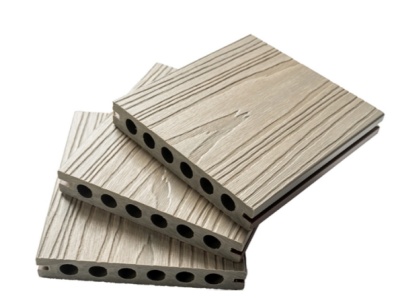
There is no single reason for the longer performance of WPC. Instead, several material advantages work together.
One of the biggest threats to outdoor decking is water. Wood naturally absorbs moisture, which can lead to swelling, shrinkage, decay, and structural weakening over time. WPC boards are engineered to reduce water absorption, making them more stable in wet or humid conditions.
Because WPC does not behave like natural timber, it is generally less vulnerable to fungal rot. This becomes especially important in shaded gardens, rainy climates, or installations near soil and water features.
Wood can be vulnerable to termites and other insects in some regions. WPC outdoor flooring is typically much less attractive to these pests.
Traditional wood surfaces may crack, splinter, or become rough as they age under sun and rain. WPC is designed to keep a more consistent surface over time, particularly when higher-quality capped products are used.
When comparing WPC outdoor flooring vs wood decking, lifespan cannot be separated from maintenance. Two decks made from different materials may begin at the same time, but the one that receives less damage from neglected upkeep often performs better over the long run.
Wood decking often needs:
· regular cleaning
· sealing or staining every few years
· sanding in worn areas
· replacement of cracked or damaged boards
· close inspection for mold, rot, or insect problems
These steps are not impossible, but they require time, labor, and expense. If maintenance is delayed, the deck may age faster.
WPC outdoor flooring typically requires:
· routine surface cleaning
· removal of dirt and leaves
· basic washing when needed
· occasional inspection of installation hardware
This much lighter maintenance profile is one reason many buyers consider WPC a better lifecycle choice, especially for second homes, commercial spaces, rental projects, or busy households.
In real outdoor use, maintenance free WPC outdoor flooring usually lasts longer than standard wood decking, especially when maintenance frequency, moisture exposure, and long-term appearance retention are taken into account. Wood can perform well, and premium hardwood options may deliver impressive durability, but they often demand more attention and more spending over time. WPC offers a more balanced combination of service life, surface stability, weather resistance, and lower maintenance requirements. That is why it has become such a strong choice in modern residential and commercial outdoor design. The answer to how long does maintenance free WPC outdoor flooring last compared with wood decking is therefore not just about years on paper. It is about how reliably the material performs when exposed to real weather, real traffic, and real ownership habits year after year.
From our perspective as a company involved in outdoor material solutions, buyers increasingly want products that reduce long-term maintenance pressure without sacrificing appearance and practical performance. That is exactly why WPC has gained such broad acceptance in decking and outdoor flooring projects. At Zhejiang Everok New Material Co., Ltd., we believe the right flooring choice should be based on lifecycle thinking, realistic outdoor conditions, and product quality rather than short-term comparison alone. If you are evaluating outdoor flooring options and want to understand more about material durability, structural design, and suitable product selection for your project, you are welcome to learn more from Zhejiang Everok New Material Co., Ltd.
Not completely. It still benefits from normal cleaning and routine inspection, but it usually does not require staining, sealing, sanding, or repainting like wood decking.
Yes, in many cases it can. High-quality WPC products often offer a longer and more stable service life, especially in wet or high-exposure outdoor environments.
It is often a strong choice for these environments because it generally resists moisture better than natural wood and requires less upkeep over time.
The main factors include product quality, formulation, installation method, drainage design, climate exposure, and how well the flooring is cleaned and used over time.


