
Views: 0 Author: Site Editor Publish Time: 2026-06-11 Origin: Site


High-stakes outdoor projects require extremely durable materials to survive harsh environments. However, the market overflows currently with varying qualities of composite boards. Sourcing failures often lead to severe warping, unexpected fading, and frustrating warranty disputes. The distinct difference between a quick five-year failure and a robust twenty-five-year asset lies strictly in the manufacturing process. Poorly produced materials degrade fast under punishing weather. Conversely, expertly engineered boards resist moisture and wear beautifully over time. You need a reliable framework to evaluate potential partners effectively. This guide helps you assess and shortlist a credible WPC decking manufacturer. We explore crucial material science, strict compliance standards, and overall supply chain reliability. You will learn exactly what to look for when securing high-grade materials. By understanding these key production metrics, you avoid costly material failures and protect your project reputation.
Technology matters most: Prioritize co-extrusion WPC decking over traditional uncapped composites for superior moisture and UV defense.
Verify, don't trust: Demand third-party testing data for load-bearing limits, slip resistance, and thermal expansion.
Warranties reveal confidence: A manufacturer’s true belief in their product is found in the fine print of their warranty—specifically regarding fading, staining, and prorated terms.
Batch consistency is a supply chain test: For large commercial or residential outdoor WPC flooring projects, the manufacturer must prove consistent color matching and reliable lead times.
A premium board starts at the molecular level. A top-tier factory carefully balances core ingredients. The optimal blend typically contains around 60% wood fiber and 30% high-density polyethylene (HDPE). The remaining 10% consists of crucial binding agents, UV stabilizers, and colorants. Deviations from this formula often compromise structural integrity. Too much wood fiber invites rapid moisture absorption. Too much plastic makes boards feel cheap. It also makes them highly prone to severe thermal expansion under direct sunlight. We strongly recommend requesting formulation details before making bulk purchases.
Next, consider the extrusion technology. First-generation uncapped wood plastic composite decking lacks a protective outer shield. It leaves wood fibers completely exposed to the elements. These traditional boards remain highly vulnerable to moisture penetration and severe fading. While cost-effective upfront, uncapped boards pose significant long-term risks. They often fail prematurely in high-exposure areas.
Conversely, modern projects demand advanced co-extrusion WPC decking. Manufacturers wrap these engineered boards in an impermeable polymer shield. This advanced capping process provides superior defense against stains, deep scratches, and UV degradation. It represents the absolute non-negotiable standard for professional outdoor builds today.
We must also address aggressive marketing claims in the industry. Many suppliers eagerly promote fully waterproof composite decking. In reality, no wood-based core is entirely waterproof if permanently submerged. High-quality capped boards are exceptionally water-resistant. However, proper drainage remains mandatory. Installers must ensure adequate runoff slopes. This prevents standing water from causing structural substructure rot over time.
Technology Comparison Chart: First-Gen vs. Co-extrusion | ||
Feature Metric | Traditional Uncapped Decking | Co-extrusion (Capped) Decking |
|---|---|---|
Outer Protection | None (Exposed composite core) | Full 360-degree dense polymer shield |
Moisture Resistance | Moderate (Prone to slow absorption) | High (Virtually impermeable outer cap) |
Fading & Staining | High risk of fading over time | Excellent color retention and stain blocking |
Maintenance Needs | Occasional aggressive cleaning required | Simple soap and water wash |
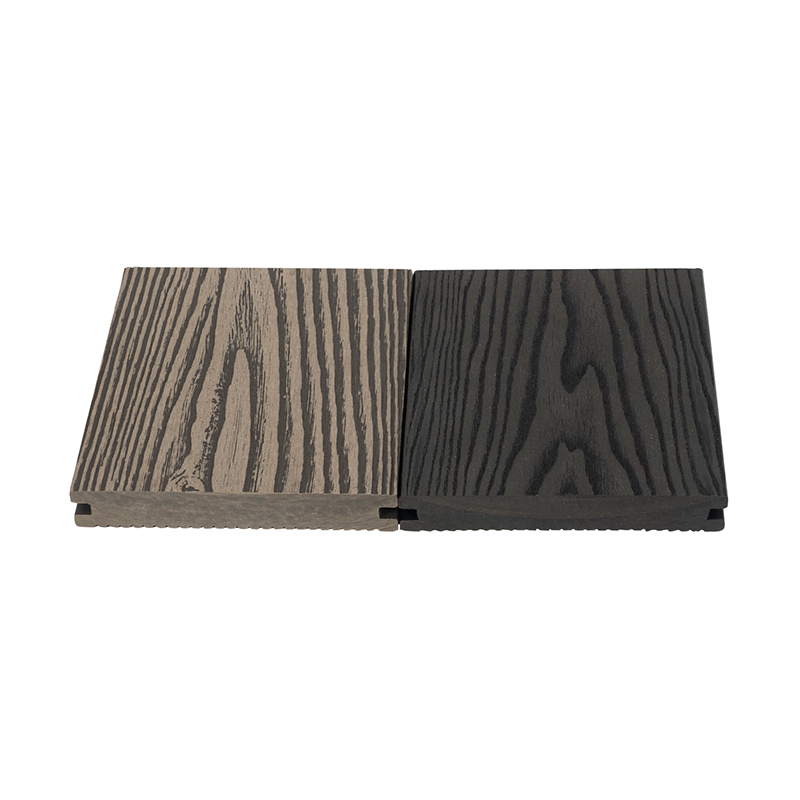
Marketing materials look great, but hard data proves actual performance. Reliable manufacturers provide comprehensive data from independent testing laboratories. They rely on standardized frameworks like ASTM D7032 or EN standards. Internal marketing metrics often exaggerate product capabilities. You should always demand official third-party testing documentation. This ensures the boards meet strict structural safety requirements.
You must evaluate several core performance metrics closely:
Thermal Expansion and Contraction Tolerance: Boards will naturally shift under severe temperature swings. Ask how the factory formulates their core to minimize this movement. Inferior boards buckle or warp drastically when summer temperatures spike.
Surface Treatment and Slip Resistance: Practical safety matters immensely. Evaluate the embossing and texturing techniques used on the board surface. High-traffic outdoor WPC flooring requires strong slip resistance. Look for documented Pendulum Test Values (PTV). These numbers demonstrate safe wet-weather performance for commercial spaces.
Fire and UV Ratings: Specific climates require specialized compliance factors. Municipal building codes often dictate strict fire resistance ratings (such as Class B or Class C classifications). Furthermore, robust UV inhibitors prevent beautiful dark boards from turning chalky gray over a single summer.
Load-Bearing Capacity: Request flexural strength testing data. Heavy commercial furniture and high foot traffic demand exceptional core density.
Make sure the supplier fully understands your local climate challenges. Their product must explicitly meet your regional safety codes. Never assume international products automatically comply with local structural requirements.
Finding a great product solves only half the procurement problem. You also need guaranteed material availability. Supply chain stability separates a true manufacturing partner from a simple middleman reseller. You must carefully assess their actual production capacity before signing large contracts. Lead times matter critically for bulk commercial timelines. Unexpected delays in material delivery will stall entire construction schedules.
Top-tier factories run highly controlled, scalable operations. Consider these crucial supply chain factors when interviewing a potential supplier:
Consistent Production Capacity: Verify their average monthly output volume. Ensure they can handle your bulk orders easily. They should not delay other shipments to fulfill your requirements.
Color Consistency Across Batches: Manufacturing variances happen frequently in lower-tier factories. Top manufacturers use automated colorant dispensers. They strictly control color uniformity across massive production runs. They measure color differences using Delta E standards. This prevents mismatched, patchy boards on large commercial decks.
Advanced Customization Capabilities: Standard board lengths often generate unnecessary project waste. Capable manufacturers easily offer custom length extrusions. They also provide specialized profile options. You can choose between cost-effective hollow designs or heavy-duty solid configurations. Finally, they supply matching fascia boards and exact-color stair treads for a cohesive architectural finish.
Partnering with a fully scaled supplier reduces project friction drastically. They adapt quickly to your unique architectural requirements. They also manage global shipping logistics efficiently.
A warranty reveals a manufacturer's genuine confidence in their boards. Never accept verbal durability promises. You must dive deeply into the contract fine print. Standard contracts often hide specific clauses limiting manufacturer liability. A twenty-five-year warranty means very little if clever loopholes protect the supplier instead of the buyer.
First, evaluate the difference between prorated and non-prorated warranties. Non-prorated contracts offer full replacement value for the entire stated term. Prorated warranties reduce in value steadily over time. If a board fails completely in year fifteen, a prorated warranty might only cover a tiny fraction of the replacement cost. Always push for non-prorated coverage whenever your budget allows.
Next, analyze fading and staining clauses carefully. Industry standards do allow for a slight initial color shift during the first few months. However, unacceptable fading signifies a clear manufacturer defect. The warranty must strictly define what constitutes acceptable weathering. It should protect you against severe, uneven discoloration caused by normal sunlight exposure.
Pay close attention to strict installation stipulations. These rules often void coverage entirely if installers ignore them.
Joist Spacing Limits: Manufacturers mandate maximum spans between joists (typically 16 inches on center for residential). Exceeding this limit causes boards to sag visibly.
Fastener Selection: Using unapproved hidden clips or incorrect screws nullifies the contract immediately. Always use proprietary or explicitly approved fastening systems.
Ventilation Requirements: Inadequate airflow underneath the deck traps rising moisture. This causes the composite core to swell. This specific failure shifts liability away from the manufacturer directly to the installer.
Finally, assess their available technical support infrastructure. A reputable supplier provides comprehensive, illustrated installation guides. They offer accessible builder support hotlines. They want your installation to succeed perfectly.
You now understand the critical evaluation metrics. It is time to finalize your supplier shortlist systematically. Start by aggressively requesting physical samples from your top contenders. Do not rely on digital catalogs or glossy brochures for texture evaluation. When physical samples arrive, inspect the cap thickness closely. A thicker, uniform polymer shell offers better scratch protection. Check the core density by examining the cut ends. Perform a simple scratch test using a standard house key. High-quality boards resist moderate pressure without gouging deeply.
Next, audit the manufacturer's global project portfolio. Ask for proven case studies in climates similar to yours. If you build in a freezing coastal zone, demand examples of their boards surviving icy, salty conditions. A seasoned manufacturer proudly shares long-term success stories. They will provide photographic evidence of older installations holding up perfectly.
Finally, shift your focus away from the lowest initial price tag. Calculate the lifecycle longevity instead. Cheaper boards require frequent attention and early replacements. They suffer from severe warping, dangerous splintering, and ugly color loss. Premium boards offer true zero-maintenance benefits. They never require tedious sanding, staining, or toxic sealing. Over a twenty-year period, a high-quality installation dramatically outshines budget alternatives. Prioritize materials providing true structural longevity and absolute peace of mind.
Selecting a reliable supplier is fundamentally an exercise in strict risk mitigation. Your choice directly dictates the safety and aesthetics of your entire outdoor space. We covered the critical importance of proper material science. We explored why third-party laboratory testing proves actual performance claims. We also reviewed how supply chain consistency ensures smooth, predictable project execution.
Prioritize manufacturers offering highly transparent testing data. Seek out advanced co-extrusion technology to guarantee superior weather resistance. Demand straightforward, non-prorated warranties over suppliers competing solely on dangerously low prices. The cheapest board often becomes the most frustrating mistake over time.
Take immediate action today. Encourage your procurement team to request comprehensive technical specifications. Order physical samples from your top three choices. Compare their detailed warranty documents side by side carefully. Thorough preparation guarantees you finalize the best possible supplier for your next big build.
A: No, not all boards feature a protective cap. First-generation uncapped boards leave the wood-plastic core exposed to the elements. They absorb moisture more easily and fade quickly under direct sunlight. Modern co-extruded boards feature a robust polymer cap covering the core. This advanced capping provides superior resistance against stains, scratches, fading, and moisture damage.
A: No, you should never install composite boards directly on the ground. Direct ground contact traps moisture and restricts essential airflow. Proper ventilation remains crucial for structural longevity. Most manufacturers mandate specific ground clearances in their official installation guides. Ignoring these ventilation requirements usually voids the manufacturer warranty entirely.
A: Manufacturers address thermal expansion through precise material formulation and strict installation rules. Plastic naturally expands when heated. To combat this, installers must leave specific gaps between boards. They also must gap board ends where they meet. The manufacturer dictates these exact spacing requirements based on their unique material formula and expected local temperature swings.
A: Neither is inherently worse; they simply serve different project purposes. Hollow boards use less raw material. They are significantly lighter and more cost-effective. However, they lack the structural mass for high-impact commercial areas. Solid boards mimic the dense feel of real wood. They offer superior strength and better sound absorption, making them ideal for premium residential decks.


